
Are you looking to design, renovate, or manage a building? Safety should be paramount in your checklist. Passive fire protection is one of the prime options that many home owners and architects focus on.
Two of the most popular and effective solutions used to compartmentalize buildings are fire-rated shutters and fire curtains. Both the systems have been known to be quite effective in this context. However, they come with a different design, material, application, and structural impact.
But how do you choose the right option among them? Let us break down the core differences between the two fire protection options.
Fire Curtains: What are they?
A fire curtain is a highly flexible and lightweight barrier for controlling fire. It is designed to deploy itself automatically in the event of a fire. These fire curtains are constructed from woven textile fabrics.
These textiles are heavy-duty fiberglass or wire-reinforced woven materials. They are also treated with specialized fire-retardant coatings, such as silicone or polyurethane.
The pros of fire curtains
- Minimalist Aesthetics and Space Efficiency: They are made of fabric. These curtains can roll tightly into incredibly compact steel headboxes. They can be recessed completely into suspended ceilings. This makes them a favorite for open-plan modern offices, hotels, museums, and high-end retail spaces
- Superior Smoke Control: Fire curtains excel as smoke-resistant seals. They restrict the migration of deadly gases through stairwells, lift shafts, and corridors.
- Lightweight Architecture: They place very little structural load on a building. This means they can be fitted to lightweight partition walls or non-structural ceilings without requiring heavy reinforcing steel supports.
- Regulatory Compliance: Modern fire curtains are engineered to meet strict fire-testing standards. Thus, they provide reliable integrity ratings
The cons of fire curtains
- Limited Radiant Heat Insulation: A fabric curtain is excellent at stopping actual flames. It may not block the invisible radiant heat as effectively as a thick steel shutter
- Vulnerability to Mechanical Damage: Fabric can rip, puncture, or tear if struck by heavy equipment, moving pallets, or sharp objects. This restricts their use in heavy industrial environments.
- Electrical Dependency: Fire curtains rely heavily on electronic control systems and gravity-fail-safe motors to drop. They feature battery backups; any severe electrical failure or lack of routine maintenance can compromise deployment.
Fire-Rated Shutters: An Overview
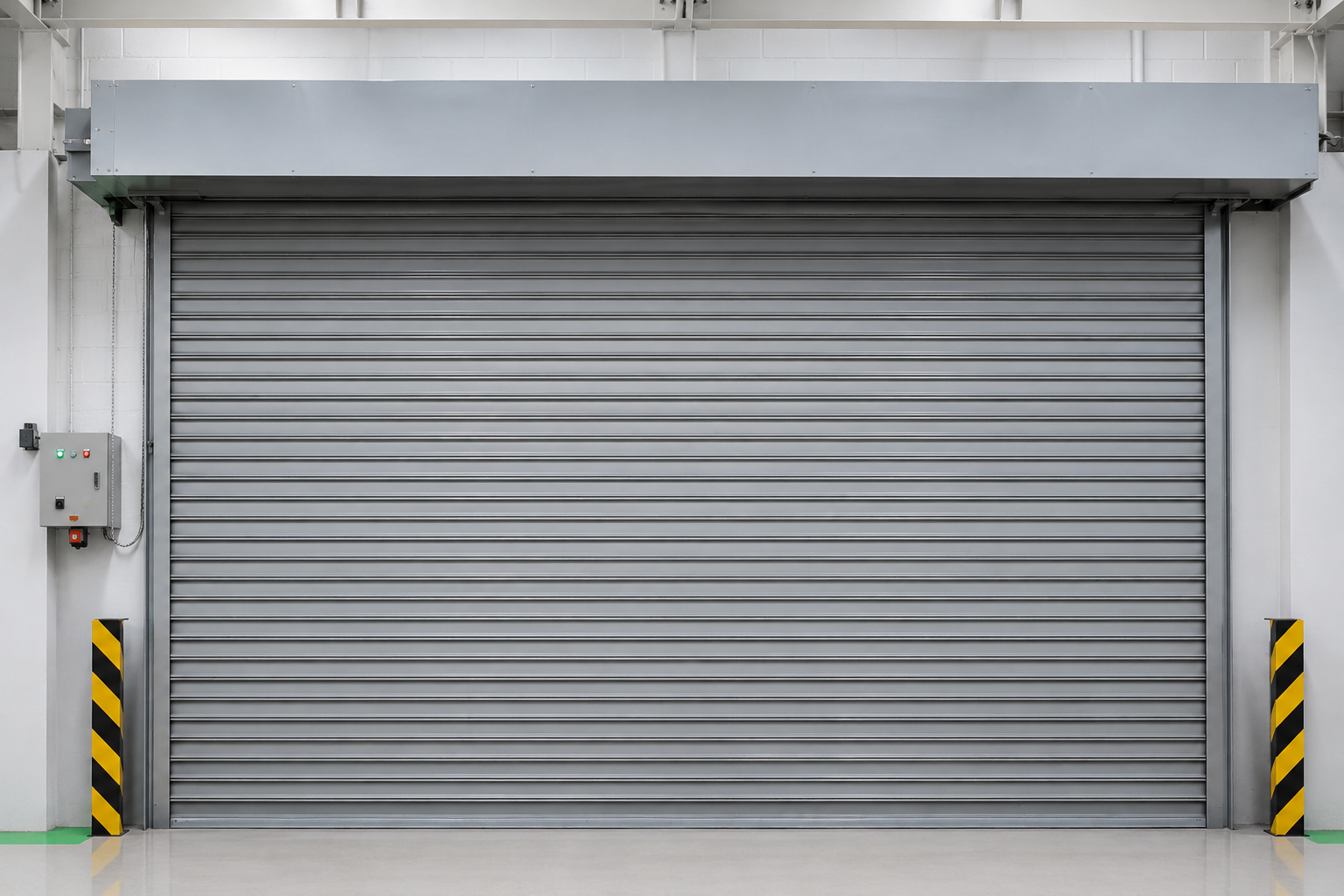
A fire-rated shutter is a heavy-duty, motorized roller shutter constructed from interlocking slats of galvanized steel or robust aluminum. It is tied directly into the building’s fire automation or localized heat sensors (like fusible links).
The typical differences between a fire-rated shutter and a fire curtain can be well understood from the table below.
| Feature | Fire-Rated Shutters | Fire Curtains |
| Primary Material | Interlocking slatted steel or aluminum | Woven fiberglass / wire-reinforced fabric |
| Visual Presence | Visible overhead box and side guides (Industrial) | Invisible when retracted (Hidden in ceiling) |
| Dual Purpose | High fire resistance + Physical security protection | Fire and smoke containment only |
| Structural Weight | Very heavy; requires structural reinforcement | Lightweight; minimal structural impact |
| Durability | High impact resistance; survives harsh conditions | Vulnerable to punctures and tears |
The Pros of Fire-rated shutters
- Unrivaled Flame and Heat Resistance: Fire-rated shutters are built like tanks. The thick steel slats can withstand roaring, high-intensity temperatures for several hours
- Built-in Physical Security: This is the primary operational advantage of a fire-rated shutter. It is made of solid metal. These shutters also double as a heavy-duty security door when the building is closed. This dual-functionality provides excellent protection against burglary, vandalism, and forced entry
- Extreme Durability: Steel shutters handle daily wear and tear effortlessly. They are highly resistant to impact. This makes them perfect for chaotic environments where forklifts, pallet jacks, or heavy machinery operate.
- Weather and Wind Resistance: Rigid steel shutters hold their ground against harsh drafts, internal building pressures, and strong wind currents.
The Cons of Fire-rated shutters
- Industrial Aesthetic: The fire-rated shutters look utilitarian. The bulky overhead barrel enclosure, massive side guides, and visible steel slats cannot be completely hidden. They look perfectly at home in a warehouse
- Space and Weight Demands: Steel is heavy. Fire-rated shutters require solid, load-bearing concrete or structural steel framing to support their weight. They also require much larger installation clearances around shutters and ceilings.
- Higher Installation Complexity: Due to the weight, scale, and motor requirements, installing fire-rated shutters is a labor-intensive process that can be more costly upfront compared to lightweight options.
Head-to-Head Comparison: Which One is the Best?
The debate between the fire-rated shutters and fire curtains can be never-ending.
Choose fire curtains if:
- You are managing an open concept. This is the perfect choice for areas that you want to keep wide, unbroken visual spaces during normal hours.
- Your main hazard priority is keeping escape routes clear of toxic smoke and choking gases.
- You are retrofitting fire protection into an older building with lightweight partition walls that cannot support tons of steel.
Choose Fire-rated Shutters If:
- You run a commercial retail shop front, a warehouse kitchen, or an industrial factory where you need a barrier that stops a fire and stops a burglar at night.
- The environment involves heavy equipment, high traffic, and a high risk of accidental physical impact.
- You need a robust barrier to seal off severe fire-risk areas, like chemical storage units, boiler rooms, or commercial serving hatches.
Making The Right Choice For Your Space
Fire safety is non-negotiable in any home. Both fire-rated shutters and fire curtains come with their own plus points and minus points. Make the final choice based on spatial constraints, interior design goals, structural limitations, and budget realities.
Are you looking for top-tier industrial shutters and fire protection? Glidemaster Roller Shutter Co. is a premier manufacturer specializing in advanced closure systems. We offer a diverse lineup of high-quality products.
To ensure your building meets local safety regulations while remaining perfectly functional, contact qualified fire safety engineers and trusted structural professionals before making your final investment.