
Are you planning to install new rolling shutters for your commercial unit, garage, or industrial facility? If so, the sheer number of available options can easily become overwhelming. One of the first and most critical decisions you’ll need to make is choosing between insulated and uninsulated shutters.
Of course, both these methods help you protect your property. But their functionality remains completely different. Choosing the wrong option can result in high energy bills, excessive noise, or unnecessary expenses.
The primary structural differences
The fundamental difference between the two types of shutters lies in their architecture.
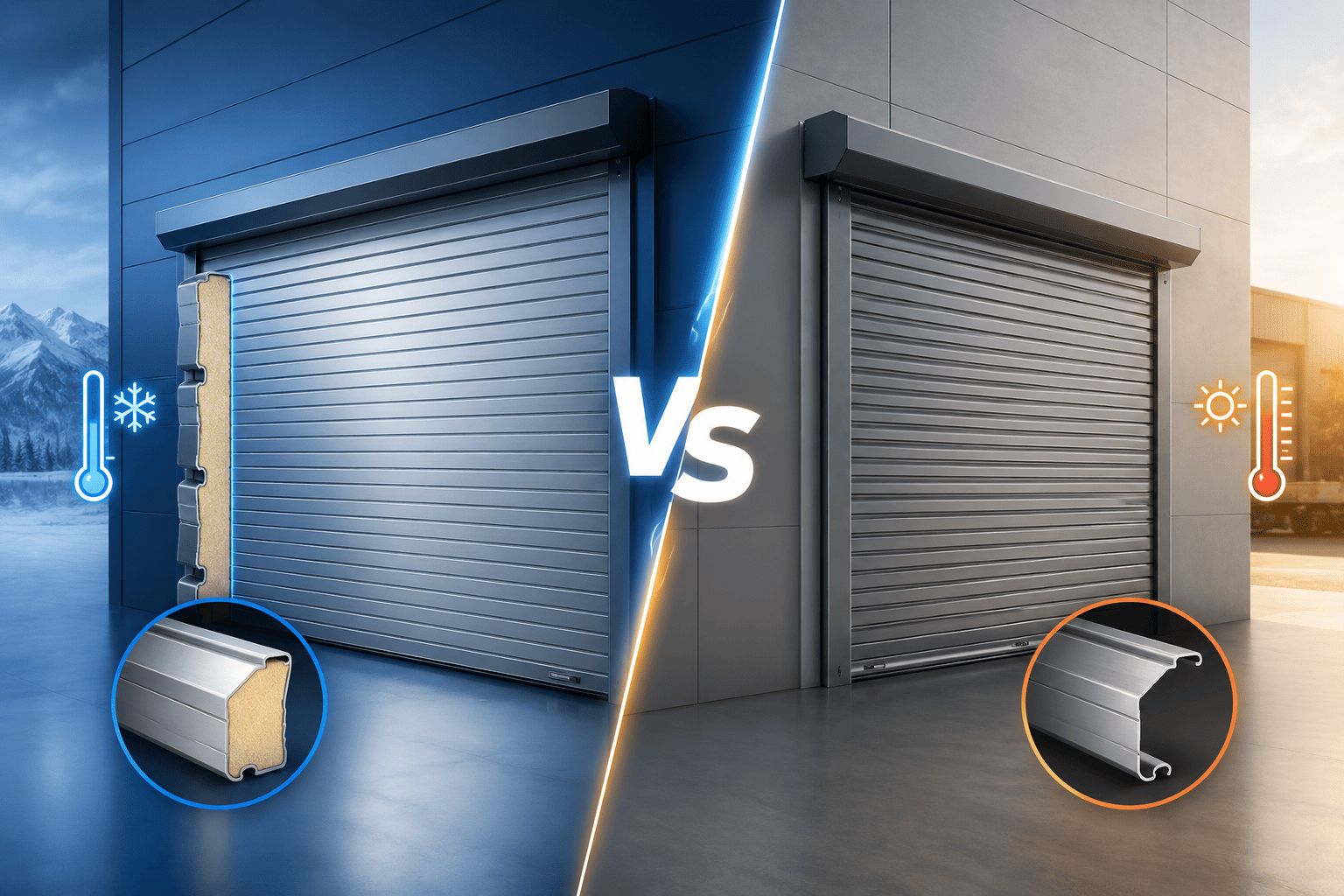
Insulated Shutters: The insulated shutters come with a double skin design. Each slat is constructed using two layers of high-grade aluminium or galvanised steel. The hollow core between these layers is injected with a dense, insulating material. Typically, polyurethane foam is used for this purpose. These systems include rubber weather seals along the guide channels and bottom rail to minimise air infiltration.
Uninsulated shutters: These are generally referred to as standard shutters or single-skin shutters. They are built using a single layer of interlocking steel or aluminium slats. These shutters do not have secondary layers, internal cores, or comprehensive weather seals.
The architecture of these shutters is lightweight, mechanical, and straightforward.
Head-to-head comparison
Let us compare the insulated and uninsulated shutters and their performance based on the key operational parameters.
Temperature Control & Energy Efficiency
Insulated shutters: These shutters serve as a thermal barrier, stabilising indoor temperatures. They can help keep the heat inside during the cold months and keep the insides cool during summers. This should help control the reliance on heating, ventilation, and air conditioning (HVAC) systems. This can help achieve lower utility bills.
Uninsulated shutters: The single-skin metal is highly conductive to heat. Uninsulated shutters provide zero thermal protection. That should allow interior temperatures to fluctuate in alignment with external weather conditions.
Noise Reduction
Insulated shutters: The core will help as an effective acoustic barrier. It can efficiently dampen the ambient sound waves. Furthermore, the double-skin structure minimises the physical rattling often caused by high winds.
Uninsulated shutters: These shutters lack sound-absorbing materials. The single-skin metal panels allow sound to pass through freely. High winds or structural vibrations can cause the slats to clatter against each other within the guide tracks, increasing ambient noise.
Durability & Structural Rigidity
Insulated shutters: The composite panel helps create a rigid panel. This structural depth makes the curtain highly resistant to deflection, bending, and impact damage. They are much more ideal for wide openings or locations prone to severe weather.
Uninsulated shutters: The single-skin slats are more flexible and prone to denting upon localised impact. Over wide spans, they are more susceptible to bowing under heavy wind pressure.
Security
Insulated shutters: The insulated shutters add structural thickness, a double-layered metal wall, and increased weight. This makes the insulated shutters a formidable physical deterrent. Forced entry into the double-skin barriers needs specialised tools and a considerable amount of time.
Uninsulated shutters: The uninsulated shutters provide reliable security. They act as a solid visual and physical barrier against vandalism and standard forced entry. However, they lack the reinforced depth of their insulated counterparts.
Maintenance and installation costs
Insulated shutters: These systems consist of complex mechanisms. This makes them considerably heavier. That would make installation take a long time. Long-term maintenance requires periodic inspection of the weather seals and checking that the heavier operational load isn’t prematurely wearing down structural components.
Uninsulated shutters: The uninsulated shutters come with a high degree of simple operation. Since they are lightweight, even the installation is completed faster. These shutters require minimal maintenance.
The cost effectiveness
If you want to analyse the true cost comparison between the insulated and uninsulated shutters, we need to pay attention to both initial cost and long-term cost.
| Feature | Insulated Shutters | Uninsulated Shutters |
| Initial Upfront Cost | Higher (due to double-skin materials and advanced engineering) | Lower (economical, budget-friendly manufacturing) |
| HVAC Energy Savings | High long-term savings in climate-controlled spaces | None |
| Lifespan Impact | Highly durable; resistant to minor dents and wind damage | Prone to minor bending over time if exposed to high wind |
| ROI Potential | High ROI for businesses aiming to cut operational energy costs | Fast ROI based entirely on low initial capital expenditure |
Which one should you choose?
The right type of shutters would depend on the exact application area where you are looking to install them.
Use insulated shutters in the following scenarios:
- Climate-Controlled Warehouses: Indispensable for cold-storage facilities, food distribution centres, and pharmaceutical warehouses where strict temperature ranges must be maintained.
- Commercial Manufacturing & Industrial Units: Creates a safer, more temperate environment for workers while isolating noisy industrial processes from nearby residential areas.
- Attached Residential Garages: Stops external cold or heat from seeping into the main house through a shared wall, keeping utility costs low.
Use uninsulated shutters in the following cases:
- High-Traffic Retail Fronts: Excellent for shopping malls or high streets where the priority is after-hours security and vandalism prevention rather than climate control.
- Internal Partitions: Ideal for separating internal zones within a large warehouse or factory where temperature differentials are not an issue.
- Budget-Conscious Commercial Units: Perfect for commercial properties such as unheated storage facilities, detached outbuildings, or vehicle depots where items only need protection from the elements and theft.
Making the final decision
Choosing between the two shutter designs comes down to analysing your space and exact needs you may have. If you want basic security and are looking for competitive pricing, an uninsulated shutter should be the right pick. However, if you are eyeing climate stability, acoustic insulation, robust durability, and long-term energy savings, you should go with the insulated shutters.
Partnering with an expert in rolling shutters helps you find the right options for your specific needs. Glidemaster India specialises in advanced manufacturing of high-grade roller shutters, automatic shutters, and industrial entry systems. Contact us and take your security to its optimum level.