Security for businesses has moved well beyond locks, alarms, and cameras. The property’s physical entry points need to provide reliable protection while allowing employees to run the place efficiently. That’s a big part of why automatic shutters are used in more retail outlets, warehouses, factories, showrooms, and commercial buildings across the country.
Unlike manual shutters that require physical effort every time they’re operated, automatic systems use motorised mechanisms for controlled movement. This makes access more convenient, reduces manual handling, and helps businesses secure their premises.
What Are Automatic Shutters?
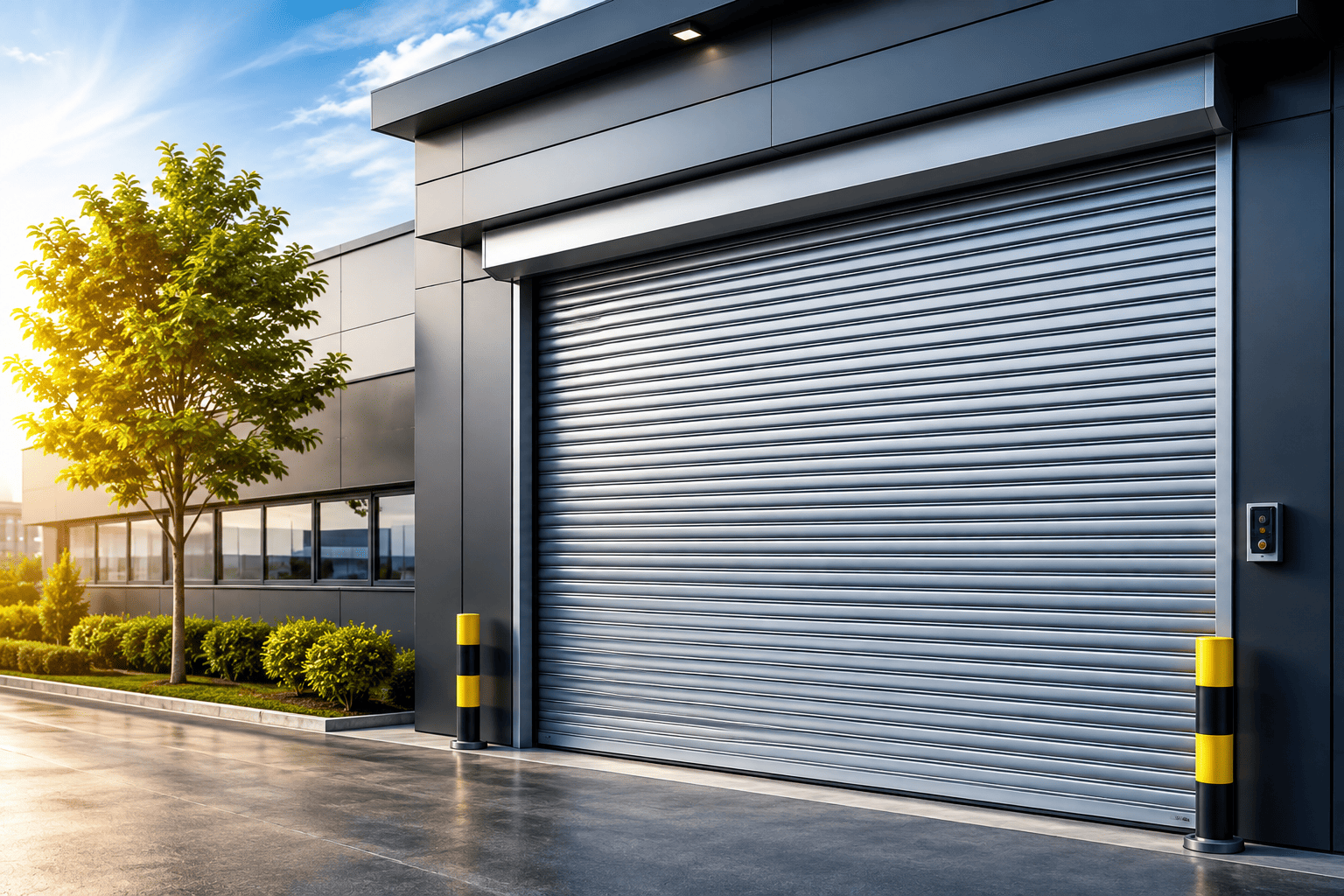
Automatic shutters are motorised security shutters that can be opened and closed without lifting or pulling them. Control may be via a wall switch, remote control, access-control system or other compatible mechanisms depending upon the system. They can be found in retail shops and showrooms, warehouses and storage facilities, manufacturing and industrial units, commercial buildings, residential and service centres, shopping complexes and loading or service entrances.
Why Are Businesses Moving Away from Manual Shutters?
Manual shutters still work for certain applications, but they require employees to physically operate them every day. For businesses with large openings, frequent access requirements, or multiple shutters across a site, that quickly becomes inconvenient.
Repeated manual operation can also lead to uneven handling, impact damage, misalignment, or unnecessary wear on components if the shutter isn’t operated carefully. Automation provides more controlled movement and takes the physical effort out of the equation. For businesses looking to improve both security and daily operations, it’s a practical step forward.
Stronger Physical Security
One of the primary reasons for businesses to put up shutters is to provide a strong physical barrier against unauthorised access. A good shutter, when closed, protects doors, windows and other vulnerable openings. Depending on the system, motorised operation can also allow the shutter to be integrated into a broader access control scheme. This is especially helpful for retail stores with products inside when they are outside of business hours. Shutters may also be used in warehouses and industrial buildings as a means of restricting access to storage and operating areas.
Faster and More Convenient Access
For businesses that open and close their premises frequently, convenience genuinely matters. An automatic shutter lets employees operate the entrance via a control mechanism rather than manually raising something heavy, particularly useful for shops starting the day, warehouses taking deliveries, garages moving vehicles, loading areas with constant traffic, and large commercial openings that would be impractical to operate manually.
Reduced Manual Handling and Better Workplace Safety
Manually lifting and lowering shutters, especially larger or heavier ones, involves real physical effort. Poor handling can lead to accidental injuries or mechanical problems over time.
With automatic operation, that’s taken out of the equation. Safety features such as obstruction detection, controlled stopping and limit settings can also further reduce operational risks. Businesses need to choose systems with appropriate safety features and that are installed and maintained correctly.
More Consistent Daily Operation
A manual shutter might be opened partially, closed unevenly, or operated with too much force on a rushed morning. An appropriately installed automatic system follows a controlled cycle, reducing reliance on individual employees getting it right every time.
For businesses with several entrances or multiple locations, this consistency matters. A retail chain might want every outlet to follow a similar opening and closing routine. Automated shutters can form part of that standardised process without requiring anyone to think about it.
Supporting Energy Management
Large entrances that stay open for extended periods contribute to unwanted heat gain or loss, which is a real concern for air-conditioned commercial and industrial spaces. Automatic shutters can be operated quickly and even programmed, helping reduce the time an opening stays exposed. The actual energy benefit depends on the building, shutter construction, climate, and how the space is used, but controlling unnecessary opening time does support more efficient building operation.
Durability for Demanding Commercial Environments
Businesses need security systems that can endure repeated use. Manufacturers of automatic shutters use different materials, configurations and specifications to cater to different applications. Durability depends on shutter material, capacity of the motor, usage, opening size, quality of installation, environmental conditions and maintenance practices. If traffic is heavy, it is important to select a system designed for the expected frequency of operation.
Less Dependence on Physical Effort
For businesses where multiple employees are responsible for opening and closing premises, removing manual tasks has real operational value. Employees don’t have to repeatedly lift or pull heavy shutters, and managers can establish clearer, more consistent procedures for controlling access. This is especially useful where shutters are large, frequently operated, or positioned at entrances that would be genuinely difficult to manage manually.
Where Are Automatic Shutters Most Useful?
Different business environments have different security and access requirements, making automatic shutters well suited to a variety of commercial and industrial applications.
Retail Stores and Showrooms: Secure display areas and entrances after hours while maintaining a professional appearance during operating hours.
Warehouses: Large openings and frequent movement of goods make automatic shutters a natural fit, offering controlled access without the manual handling.
Factories and Industrial Units: Separate production, storage, and service areas while managing vehicle and employee access efficiently.
Commercial Buildings: Offices, service centres, and other commercial properties use automatic shutters at parking areas, service entrances, and restricted sections.
Automobile Facilities: Garages, workshops, and vehicle showrooms benefit from automated systems at wide entrances where frequent manual operation simply isn’t practical.
What Should Businesses Consider Before Installing Automatic Shutters?
There are various things to consider before you choose a system. These include the opening size, how often it will be used, security needs, safety features, the material, whether a professional will install it and the maintenance required. Larger openings need appropriately rated motors. Shutters used dozens of times daily need systems designed for that cycle. Security requirements determine whether integration with access-control systems is needed. Obstruction detection, emergency operation, and other properties depend on application. Proper installation, alignment, motor mounting, and electrical connections are important to reliable long-term performance.
Automatic Shutters as a Long-Term Business Investment
The move to automatic shutters is about more than replacing a manual opening mechanism. It is about improving physical security and making routine operations safer, faster and less dependent on manual effort. Choose the right system for your exact operational requirements, whether that’s securing valuable stock, managing large access points or providing controlled access in a manufacturing environment. The initial cost is usually higher than a simple manual shutter, but the evaluation should consider expected lifespan, operating frequency, maintenance requirements, security function and convenience, not just the upfront cost.
Choose Reliable Automatic Shutters for Your Business
Automatic shutters are becoming a practical choice for businesses that want security, controlled access, and operational convenience working together. They reduce manual handling, provide a strong physical barrier, support workplace safety and help businesses manage regularly used entrances.
Glidemaster is an in-house manufacturer of automatic rolling shutter systems, with a focus on solutions for commercial and industrial applications. Glidemaster offers automatic shutter solutions to businesses seeking a more thoughtful approach to protecting and controlling access to their property, focusing on product quality, technology and installation support.
Contact us to explore reliable automatic shutter solutions for your business. Whether you need shutters for a commercial property, industrial facility, or other access-controlled space, our team can help you choose a solution suited to your specific requirements.